

Follow Me
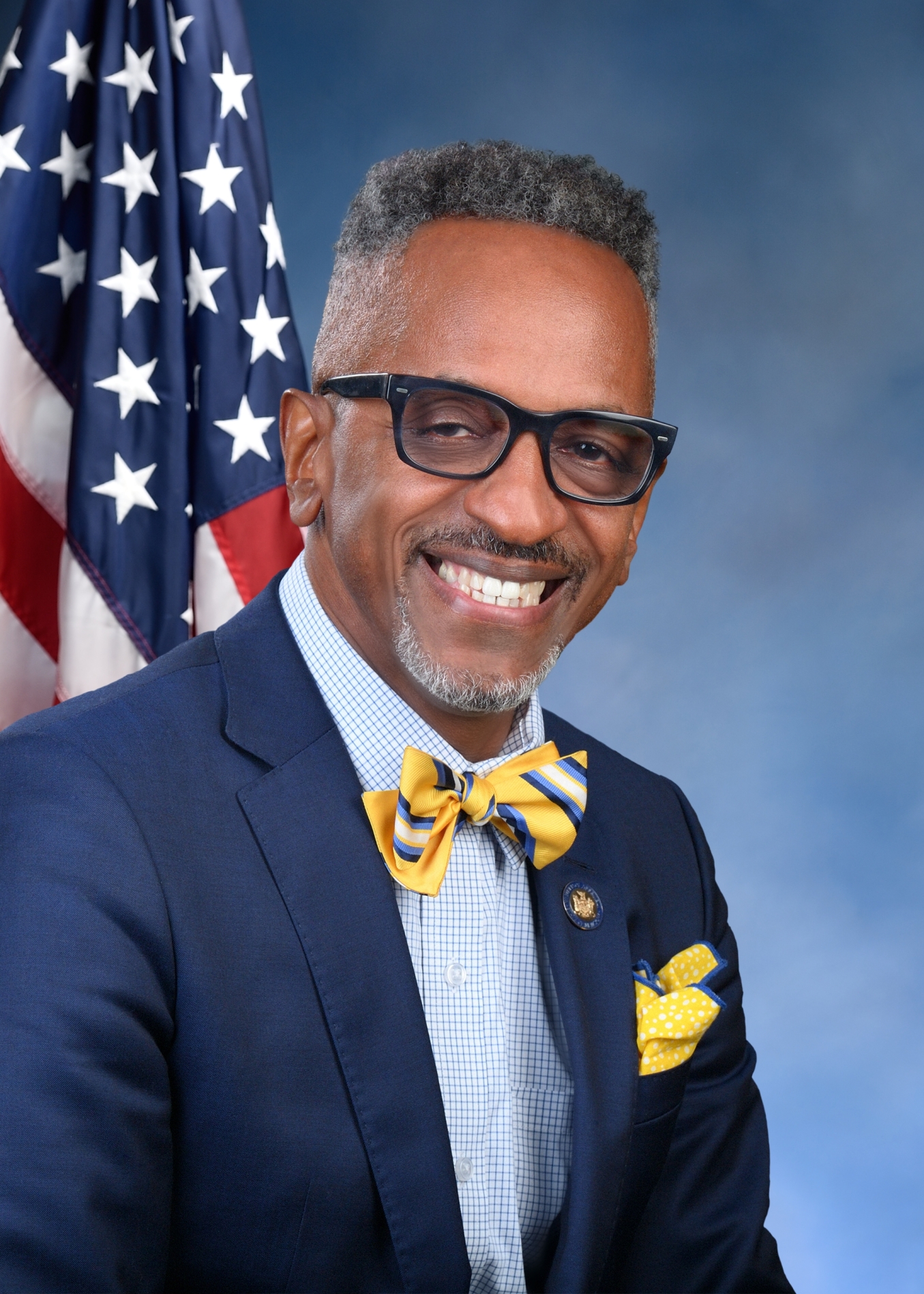
member photo
Assemblyman
Herman D. Farrell, Jr.
Assembly District 71
Translate this page
Translation may not be exact
Chair, Ways and Means Committee
May 22, 2013

Assembly Passes New York State DREAM Act
Program Would Offer State Financial Aid to Immigrant Students

On Tuesday, May 21 the Assembly passed the New York State DREAM Act, a bill that would allow students with at least one undocumented immigrant parent to apply for State financial aid and also set up a fund for donations to support these learners as they pursue higher education.

Speaker Silver, addressing the press several hours before the bill passed by a margin of 90 to 48, said that part of the three-centuries-long story of immigrants in New York is a story of overcoming barriers. Many times, the Speaker said, these barriers were intentionally set up in order to shut these immigrants out. However, many of these barriers have been knocked down.

photo
Speaker Silver presents the Assembly's DREAM Act legislation to the media.

The DREAM Act is not about pitting citizens who were born here against those who were not, the Speaker said, and is not of question of taking resources from one group to give to another. Instead, he explained, it is about opening the doors to higher education and self-fulfillment to all.

Citing a recent study by State Comptroller Thomas P. DiNapoli, the Speaker said that as of this spring the unemployment rate among people who hold only a high school diploma is double the unemployment rate among people who hold a Bachelor's degree. Also, the Speaker said, this study by the Comptroller found that workers who hold a Bachelors' degree earn wages that are 85 percent higher than wages earned by people with only a high school diploma.

This study found that for an investment of $8,000, which is the maximum TAP award for a traditional two-year degree, New York State would reap more than $35,000 in State taxes per student, which would be a benefit for all New Yorkers, the Speaker said.

The bill, A2597, also creates a DREAM Fund to raise private funds in order to provide scholarships to college-bound students who have at least one immigrant parent. Disbursement of these funds would be controlled by a 12-member commission whose members would reflect the racial, ethnic, gender, language and geographic diversity of the State.


(Back to Top)
May 18, 2013

Riverbank's 20th Anniversary Celebrated
Gov. Mario M. Cuomo Honored for Role in Building Park

During the opening ceremony Saturday, May 18 for the 20th season at Riverbank State Park, Assemblyman Farrell joined many members of the community and fellow elected officials including Governor Cuomo and former Governor Mario M. Cuomo, who was instrumental in the Park's construction.

photo
Assemblyman Farrell, former Gov. Mario M. Cuomo and Matilda Cuomo celebrate the opening of the 20th season at Riverbank State Park.

Though plans to build a park for the community on top of Northern Manhattan's sewage treatment facility took root during Governor Nelson Rockefeller's term, which ended in 1973, no real progress was made toward constructing what many call the jewel of Northern Manhattan until after Governor Mario M. Cuomo was elected in 1982.

The following year, in his first budget, the new governor made an appropriation to fund construction of the Park. Thirty years later, he was thanked for this effort by the many members of the community who turned out for the first day of a week-long celebration.

Also honored as "founders" of Riverbank were Assemblyman Farrell, L. Ann Rocker, founder and President of North River Environmental Review Board, Inc. and Dick Dattner, the architect who designed Riverbank State Park.

photo
Assemblyman Farrell and L Ann Rocker were honored as "founders" of Riverbank State Park.

Saturday's events included a parade and welcoming ceremony honoring Gov. Mario Cuomo, followed by basketball and tennis tournaments and musical performances among other events. Sunday's highlights included the continuation of Saturday's basketball tournament.

The events continue Thursday, May 23, when a Senior Social Cabaret is scheduled for 11 a.m. Call (212) 694-3656 for reservations.

On Friday, May 24, young parkgoers can enjoy the talents of Jack Ryan, the "Hoop Wizard" in the Park's gym beginning at 10 a.m.

Saturday, May 25, musical events are scheduled from 1:30 to 5 p.m. followed Sunday by a bodybuilding contest for female and male competitors from 5 to 9 p.m.

The events cap with a dance on the main stage from 1 to 4 p.m. Monday, May 27.


(Back to Top)
May 15, 2013

Farrell, Rosa and Assembly Colleagues Fighting for Workers' Rights
Farmworkers Fair Labor Practices Act Passes Assembly

Legislation that passed the Assembly today would extend important and long-needed workers' rights protections to farm workers, who currently lack collective bargaining rights, disability benefits and other protections that are held and enjoyed by other workers.

Speaking this afternoon to reporters and advocates Speaker Silver said that the Assembly's majority conference believes that New York State, which has a long history of standing up for workers' rights, should give farm workers the rights mentioned above along with time-and-a-half overtime pay, wage and job protections and the right to live in sanitary conditions.

photo
Assembly Members and workers' rights advocates appeared in the State Capitol Monday, May 13 to urge the Senate and Governor to join the Assembly in expanding farm workers' rights.

“Farm workers are not farm animals,” the Speaker said, and their health, safety and ability to provide for and spend time with their families must be respected. The Speaker noted that the Assembly has passed earlier versions of this bill, A1792A, for nearly a decade. Later in the day, the bill passed by a vote of 82 to 53. It now goes to the Senate for consideration.

“For too long, farm workers and migrant laborers who travel in search of work have been unfairly deprived of the same rights that many other workers take for granted,” Assemblyman Farrell said. “We must close this inexcusable gap in our labor laws as soon as possible. Nearly ten years have passed since the Assembly first passed this bill, and it is time for the Senate to take this legislation seriously”

Advocate Kerry Kennedy explained that this problem, which she called a “leftover Jim Crow law,” came to be during the 1930s when Congress passed federal workers’ rights legislation that excluded farm workers, who were mostly minorities. She described deplorable living and working conditions she had encountered during her advocacy of this issue.

Mario Cilento, president of NYS AFL-CIO, took pains to point out that the farm workers who would be covered by this legislation are not among his membership. However, Cilento said, as a human being and citizen of this State he is embarrassed that this issue is unresolved in 2013.

Jack Banning, the owner of a Dutchess County farm, said he supports the bill and has not yet met a small farmer who would oppose it, calling this issue more a matter of morality than money. However, he said, large-scale “agribusiness” farms oppose expanding farm workers’ rights.

Librada Paz, a former farm worker from Western New York who entered the United States at age 15, revealed for the first time that she had been repeatedly abused as a younger woman but never disclosed what had happened to her – even to family – for fear of losing her employment.


(Back to Top)
May 10, 2013

Construction of Sugar Hill Project Hits Milestone
"Capping Off" Ceremony Celebrated At Apartment Building

On Friday, May 10 Congressman Charles Rangel, Assemblyman Farrell and Assembly Woman Gabriela Rosa joined fellow elected officials, affordable housing advocates and members of the community for a "capping off" ceremony at the Sugar Hill low-income housing project, during which the roof was poured.

The modern 13-story building at St. Nicholas Avenue and 155th Street will contain 124 apartments for low-income or previously homeless families, an early education center for preschool children, a children's museum and a rooftop farm. It is slated to open in early 2014.

photo
Assembly Woman Rosa speaks about the need for more affordable housing in Northern Manhattan as Farrell and members of the community look on.

As is common with "topping off" ceremonies, a symbolic evergreen tree was planted on the rooftop. Congressman Rangel and Council Member Robert Jackson were granted the honor of pouring soil into the tree's planter. After the building is complete, other vegetation will be planted in an "urban garden" whose bounty will be given to residents or sold in the neighborhood to generate income.

Farrell, who grew up in the neighborhood, noted the event took place on the same morning that the spire was added to the top of One World Trade Center downtown, calling it a day of civic pride and progress for all New Yorkers.

photo
Farrell and members of the community discuss the Sugar Hill project.

(Back to Top)
Seal
HERMAN D. FARRELL, JR.
Assemblyman 71st District

Room 923
Legislative Office Building
Albany, NY 12248
(518) 455-5491
(518) 455-5776 FAX

CHAIRMAN
Ways and Means Committee

COMMITTEES
Rules
Black & Puerto Rican Caucus

THE ASSEMBLY
STATE OF NEW YORK
ALBANY


May 2, 2013

Fort Tryon Park Trust
P.O. Box 1044
Fort George Station
New York, NY 10040

To Whom it may Concern,

Regarding your invitation to attend the Trust's Sunset on the Hudson Gala on the evening of June 12 on the David Rockefeller Linden Terrace, it has come to my attention from one of my constituents that the Terrace is not accessible to people with disabilities.

If this is correct I hope that another, more suitable location can be selected and secured prior to your affair.

Should this prove impossible, I regret that I will be unable to attend. I hope that, when future events are being planned, that this factor plays a role in your discussions.

If I am wrong or the problem can be cured I would be glad to change my mind.

Yours truly,
Herman D. Farrell, Jr.


(Back to Top)
…and this month in Albany
May 1, 2013

Assemblyman Farrell Reports to Community Board 10

Senate Panel Advances Court of Appeals Nominee Judge Abdus-Salaam

photo
Assembly Member Keith Wright, Judge Sheila Abdus-Salaam, Deputy Chief Administrative Judge Fern Fisher (who provides oversight of State courts) and Assemblyman Farrell are shown at an April 30 meeting of the Senate Judiciary Committee. Judge Abdus-Salaam's nomination to the Court of Appeals was advanced and the Senate is expected to confirm her appointment.

As you may know, Judge Abdus-Salaam has played a prominent role in the public life of Northern Manhattan since she completed her Juris Doctorate at Columbia University School of Law. I have known her for many years, and have always found her to be a wonderful asset to our community. She was first elected to the bench in 1991, serving in the Civil Court and deciding tenants' cases from January 1992 until December 1993, when she was elected to Supreme Court. After her 2007 re-election, Judge Abdus-Salaam oversaw felony and medical malpractice cases.

Before her election to the bench, she provided legal services to the communities in New York City and performed civil rights work for the State Department of Law. I hope that you join me in applauding this major step in her already impressive career and wish her the best in the future.

Farrell and Assembly Colleagues Fighting for Reform in Albany

Since my last report to you in April, when I described our work to finish the budget for State Fiscal Year 2013-2014, the Assembly has turned its attention to ethics reform and other crucial legislation. I am sure you found it impossible to miss the bad press that followed recent accusations against elected officials who were sent to Albany to fight for their communities. I have always said that 99 percent of elected officials are honest, hardworking public servants, and it is terribly unfortunate when elected officials abuse the power of their office for personal gain.

A number of reform proposals are currently on the table in Albany, and I am happy to support a package of reform proposals put forth by Speaker Silver that would improve the ethical culture in Albany and protect against future abuse, while also making it easier to vote. We have begun to pass these ethics reform bills and more legislation will be passed in the coming days.

During the 2012 presidential elections we heard a lot about early voting in other states, which allowed working voters to cast their ballots before Election Day at a time that made voting more accessible. Yesterday, Speaker Silver and Assembly Member Michael Cusick, who chairs the Election Law Committee, introduced a bill that would allow early voting in New York. The bill later passed by a vote of 96 for, 46 against and will go to the Senate for consideration.

Their bill, which I was proud to co-sponsor, will help our democracy to thrive by allowing as many voters as possible to participate in the electoral process by overcoming voters' personal or professional time constraints. According to the US Census Bureau, 18 percent of registered voters reported they had not voted because of time constraints. If it becomes law, making New York the 33rd state to allow early voting, this bill would allow voters to cast their ballots as many as 15 days before general elections and eight days before primary and special elections.

Farrell Working to Close Loopholes in the Rent Laws

I recently met with a constituent who described to me an all-too-common problem with her landlord: after performing several minor repairs in the apartment, the landlord used these minor repairs to justify raising the rent to $2,500 per month, which is the threshold that must be reached in order to remove an apartment from the rent regulation system. If the rent for this apartment is allowed to remain at the maximum for four years, the apartment is removed from the system and the landlord is allowed to charge whatever they please in rent. Many tenants are afraid to report this abuse, as they fear having a hard time getting another apartment in the future.

Thankfully, my constituent had thoroughly documented other questionable rent increases in her building, information she turned over to the head of the Tenant Protection Unit at New York State Homes and Community Renewal, who are investigating this constituent's problem at my request. This case will also be taken up by the Court of Appeals some time in the near future.

Unfortunately, the larger problem is that these reviews can sometimes take a very long time, and by the time investigations or judicial procedures are complete, the tenant has already lost their apartment. This, of course, is not acceptable, and I am working with my Assembly colleagues to draw up legislation that will streamline the process of reviewing tenant complaints and prevent bad landlords from dragging their feet and holding up the process until tenants lose their homes. Please expect to hear more about this important issue in future reports.

Yours truly,
Herman D. Farrell, Jr.


…and this month in Albany
April 25, 2013

Assemblyman Farrell Reports to Community Board 9

As you may have heard, on March 28 the Assembly finished its work on the budget for State Fiscal Year 2013-2014, which, excluding $6.2 billion in Federal money for "Superstorm Sandy" reconstruction efforts, totals $135.1 billion, an increase of less than 2 percent over last year. This marks the third year in a row the budget passed on time or early, a feat that has not been duplicated in more than 30 years.

State Budget Restores Cuts and Increases Aid for Education

Our budget increases school aid by $436 million above the amount initially proposed by Governor Cuomo. Over $300 million of that amount is for New York City schools, which are funded at a level of $8.28 billion overall. Total Formula Base Aid for schools statewide is $936 million more than was allocated last year, for a total of $20.8 billion. We also increased funding for community college base aid, college opportunity programs, and full-day pre-Kindergarten.

The Assembly met most of its' top legislative priorities for the budget, including raising the minimum wage to $9 per hour by 2016, which will benefit almost 1 million New Yorkers who now earn less than $9 per hour, while stimulating our economy because these workers tend to spend their wages as soon as they receive their pay. We also succeeded in extending the "millionaires' tax," providing much-needed revenue to support State operations.

Partial Restoration of Developmental Disability Programs Achieved

Unfortunately, our success at restoring budget cuts could not be extended to the Office for People with Developmental Disabilities (OPWDD). As you may have heard, Washington recently made deep cuts to New York's funding for these and other programs, claiming that New York had been over-billing the Federal government for years and seeking to recover $1.1 billion.

Governor Cuomo was successful in reaching a deal with Washington to roll some of these cuts back, but because Washington brought down the axe so late in our budget process, the Governor had no choice but to make cuts to services for New Yorkers living with disabilities. Because of the sensitivity of the Governor's negotiations, the Legislature had no choice but to accept these cuts for this year only. If we had not taken the deal, the 6 percent cut ($500 million) to these programs would have become a 12 percent cut ($1.1 billion) which would have been even worse.

My colleague, Assembly Member Harvey Weisenberg of Long Island, whose adult son is developmentally disabled, made an impassioned speech from the floor damning these cuts. He was right to decry the damage these cuts will do, but in the end he saw they were necessary and voted to accept them. As we go forward, my colleagues and I will work to stop future cuts to these vitally important programs that protect some of the most vulnerable New Yorkers.

Farrell Working to Improve the Quality of Life in the Community

Every year, as the weather turns warm, I have always met with the precinct commanders of the New York Police Department. One of the main issues we have always discussed quality of life issues, specifically noise from the parking area of Riverside Park. As you may know, this area can often be a popular and crowded spot during the spring and summer months.

To make life bearable for those who live in this area, particularly the people who live in the buildings that face the park, I have always worked with the police to make sure that traffic is allowed to flow freely, that radios are not turned up too loudly, and other sources of noise in the park do not become a disruption. I will be meeting soon with Deputy Inspector Ruel R. Stephenson, who commands the 30th Precinct, to talk about how I can help his officers keep the noise down in the park and make sure that the park is clear and the gates are locked by 9 p.m. so that the neighbors can enjoy a peaceful night's sleep.

photo

We are lucky to be joined in these efforts by our longtime representative, Congressman Charlie Rangel, who is seen here joining Senator Adriano Espaillat and I at a recent Town Hall Meeting. Other elected officials from Northern Manhattan are also working hard to help improve the quality of life in our community. Seen below, my newly-elected colleague and longtime former staff member, Assembly Woman Gabriella Rosa, joined myself and other local activists and elected officials at a recent event to demand Washington stop stalling and fix immigration law.

photo

Yours truly,
Herman D. Farrell, Jr.


(Back to Top)
…and this month in Albany
April 23, 2013

Assemblyman Farrell Reports to Community Board 12

As you may have heard, on March 28, the Assembly completed its work on the State budget for Fiscal Year 2013-2014, which began April 1. This marks the third year in a row that the Legislature has passed an on-time budget, a feat not accomplished in nearly 30 years. Aside from $6.2 billion in Federal funds for "Superstorm Sandy" recovery, the budget totals $135.1 billion, an increase of less than 1 percent over spending during State Fiscal Year 2012-2013, for a total budget of $141.3 billion that closes a budget gap of $1.4 billion.

photo
Assemblyman Farrell debates budget bills on the Assembly floor, March 28, 2013.

State Budget Increases Aid for Education After 13-Hour Debate

Our budget increases school aid by $436 million over the amount proposed in January by Governor Cuomo, more than $300 million of which is for City schools. Total Formula Base Aid for schools statewide is $936.6 million more than was allocated during Fiscal Year 2012-2013, for a total of $20.8 billion. We also succeeded in raising community college base aid by $150 per full-time student for the second year in a row, to $2,422 per student, and allocated $25 million for full-day Kindergarten and half-day pre-Kindergarten programs. New York City schools are funded at a level of $8.28 billion, an increase of $363.9 million over last year and $184.3 million more than was initially proposed by the Governor.

College opportunity programs were increased by 3 percent across the board. The Higher Education Opportunity Program was increased $728,040 (to $25 million); the Educational Opportunity Program was increased by $632,430 (to $21.7 million); the Liberty Partnerships Program was increased by $376,250 (to $12.9 million); the Science and Technology Entrance Program was increased by $324,030 (to $11.1 million); and the Collegiate Science and Technology Entry Program was increased by $245,520 (to $8.4 million).

Raising the Minimum Wage and Helping the Unemployed

Our budget will increase the minimum wage to $9 per hour by 2016. This increase will directly benefit almost 1 million New Yorkers who currently earn less than $9 per hour, and my Assembly colleagues and I believe this change may benefit the economy as these workers tend to spend their earnings as they receive them. The budget also extends the "millionaires' tax" while locking in lower tax rates for middle-class families and lowering the cost of doing business in New York State for many small employers.

The budget also contains provisions to increase the weekly unemployment benefit, which is now capped at $405 per week. Over the coming years, in a series of incremental steps, unemployment benefits will rise to half the State average weekly wage, providing much-needed help to families in need. The budget also helps employers by making reforms to cut unemployment insurance costs by nearly $500 million while assuring the unemployment system is solvent in the future. We were also able to keep our promise to inner-city youth seeking jobs and opportunity by providing a tax credit to employers who hire unemployed youth aged 16 to 24 to work in the fields of clean energy, health care, manufacturing and environmental conservation. Employers will receive a tax credit of up to $4,000 per employee if these workers remain on their payroll for at least one year. This program also gives young people who wish to improve their lives the opportunity to gain valuable work experience that will serve them well later in life.

Partial Restoration of Developmental Disability Programs Achieved

Unfortunately, we were not as successful in restoring budget cuts to the Office for People with Developmental Disabilities (OPWDD). Responding to actions by the Federal government, the Governor proposed a 6 percent cut to this important program, totaling $120 million. Negotiating with the Governor and Senate, we were able to restore $30 million to OPWDD and protect OPWDD providers from suffering the effects of the Federal government's plans to recover $1.1 billion that had already been paid to these providers. As you may know, weeks after the Governor released his Executive Budget in January, the Federal government determined it had overpaid New York State's Medicaid-reimbursement program for many years and announced immediate and deep cuts to these reimbursements. This forced Governor Cuomo to fill a surprise $500 million hole in the budget at a delicate time.

Though I was happy to vote in favor of new money for education after years of cuts, it was very difficult for me to support this budget because of the harm these OPWDD cuts will do to vulnerable members of our community. My colleague, Assembly Member Harvey Weisenberg of Long Island, made an impassioned speech against these damaging cuts. Assembly Member Weisenberg, who has an adult son living with developmental disabilities, spoke of his family's experiences with the system and recalled the nightmares that have taken place. He argued passionately that protecting the disabled is one of the most fundamental responsibilities of State government, and that as elected officials we hold the fate of this nearly defenseless and voiceless community in our hands as we make decisions on the budget.

But because of the sensitivity of the Governor's negotiations with Washington, if we had voted to reject the 25 percent restoration to OPWDD, we risked a much larger cut of $1.1 billion in Federal funding for the OPWDD program. Our choice was painful, but clear. Both Assembly Member Weisenberg and I voted yes, despite our reservations. It is our intention to make these cuts to OPWDD a one-time event, and we will be fighting to restore these cuts through the end of our Session in June, and in the future.

With the budget finished, the Assembly will now turn to hydrofracking and the DREAM Act, which will allow children of undocumented immigrants, who are here through no fault of their own, to attend State colleges. We will also consider a proposal by Speaker Silver to reform State election law to allow early voting and other measures that will make it easier for voters to cast ballots and reduce the effect of "independent expenditures" on politics.

Yours truly,
Herman D. Farrell, Jr.


(Back to Top)
April 16, 2013

Buczek Little League Parade Kicks Off 2013 Baseball Season

On Saturday, April 13, 2013 baseball season officially began for young players in Northern Manhattan when the Police Officer Michael Buczek Little League Parade kicked off at 11 a.m.

photo
Young ballplayers enrolled in the Buczek Little League program hold their parade sign.

Joining the players and coaches were members of the New York Police Department and elected officials including Assemblyman Farrell, who was escorted by daughter Sophia. The parade began at the Michael Buczek School, located at West 186th Street and Broadway, snaking down Broadway to West 181st Street to St. Nicholas Avenue and onto the ball fields.

photo
Assemblyman Farrell and Det. John Moynihan, the Little League president, discuss the program.

This was the 24th year the parade was held to open the Little League season. The event also serves to remind the community of the sacrifice made in their name by Officer Buczek, who was killed in the line of duty in 1998. He was 24. Thousands of young players have since taken part in the event and had the benefit of his influence, and many have gone on to public service.


(Back to Top)
April 16, 2013

Washington Heights Officials Demand Federal Immigration Reform
Assembly Members Farrell and Rosa among Many Co-Sponsors

photo
Assembly Member Gabriela Rosa speaks during an April 10 immigration reform rally. Also pictured are City Council members Ydanis Rodriguez and Robert Jackson and community leader Mark Levine.

At a recent rally for immigration reform, Assemblyman Farrell and Assembly Woman Gabriela Rosa joined City and State elected officials plus a number of community groups to demand Congress take action to reform United States immigration law.

The rally, held at noon Saturday, April 10, was held in McKenna Square Park on 165th Street and Amsterdam Avenue. The event was co-sponsored by Farrell and Rosa plus Senator Adriano Espaillat, Council Members Ydanis Rodriguez and Robert Jackson, Community Board 12, the Washington Heights/Inwood Coalition, the Dominican Women's Development Center, Northern Manhattan Coalition for Immigrant Rights, Northern Manhattan Improvement Coalition, 1199/SEIU, 32BJ and many other organizations.


(Back to Top)

April 4, 2013

William T. Castro, Manhattan Borough Commissioner
NYC Department of Parks and Recreation
24 West 64th Street
New York, NY 10023

Dear Commissioner Castro,

I am writing to thank you for the Department of Parks and Recreation's work to replace the old metal barriers along Lower Riverside Drive between 158th Street and 160th Street with the new wooden barriers, which are a wonderful improvement. While it would seem that a great deal of back-and-forth was required to reach a successful outcome, I believe that the finished product is worth the investment of time and effort.

Once the Department has completed cleaning up after last year's "Superstorm Sandy," I propose we turn our attention to the finishing touches that are required in this area. As you may know, I recently discussed these needed improvements with your deputy, Steve Simon, who worked very hard to accomplish the initial work. Please find enclosed photos of the problem areas, which are between Riverside Drive, Upper and Lower, and from 158th Street to 161st Street.

Specifically, I would ask that the dead trees and overgrowth in the park be cleaned-up and re-seeded. Also, the broken stone retaining walls along Lower Riverside Drive between the steps and 161st and the caved-in metal guardrail be repaired, which the Department and I previously agreed would be repaired, and the dead trees which have been laying on the ground for some time be removed. Also, the slope between the upper stone wall and the lower wall has been allowed to deteriorate and will need to be repaired in the near future.

While I know that you and your employees are still busy, as spring approaches, I believe this project should be dealt with as soon as possible so we may best enjoy pleasant views of this part of the community. Please expect to hear from me by phone soon regarding these matters or, if you prefer, we can set up a meeting to discuss this project. In either case, I look forward to continuing our discussion.

Yours truly,

Herman D. Farrell, Jr.
Member of Assembly

Cc: Steve Simon


(Back to Top)
…and this month in Albany
April 3, 2013

Assemblyman Farrell Reports to Community Board 10

As you may have heard, last Thursday, March 28, the Assembly completed its' work on the State budget for Fiscal Year 2013-2014, which began April 1. This marks the third year in a row that the Legislature has passed an on-time budget, a feat not accomplished in nearly 30 years. Aside from $6.2 billion in Federal funds for "Superstorm Sandy" recovery, the budget totals $135.1 billion, an increase of less than 1 percent over spending during State Fiscal Year 2012-2013, for a total budget of $141.3 billion that closes a budget gap of $1.4 billion.


Assemblyman Farrell debates budget bills on the Assembly floor, March 28, 2013.

State Budget Increases Aid for Education After 13-Hour Debate

I am happy to announce that our budget increases school aid by $436 million over the amount proposed in January by Governor Cuomo, more than $300 million of which is for City schools. Total Formula Base Aid for schools statewide is $936.6 million more than was allocated during Fiscal Year 2012-2013, for a total of $20.8 billion. We also succeeded in raising community college base aid by $150 per full-time student for the second year in a row, to $2,422 per student, and allocated $25 million for full-day Kindergarten and half-day pre-Kindergarten programs. New York City schools are funded at a level of $8.28 billion, an increase of $363.9 million over last year and $184.3 million more than was initially proposed by the Governor.

College opportunity programs were increased by 3 percent across the board. The Higher Education Opportunity Program was increased $728,040 (to $25 million); the Educational Opportunity Program was increased by $632,430 (to $21.7 million); the Liberty Partnerships Program was increased by $376,250 (to $12.9 million); the Science and Technology Entrance Program was increased by $324,030 (to $11.1 million); and the Collegiate Science and Technology Entry Program was increased by $245,520 (to $8.4 million).

Raising the Minimum Wage and Helping the Unemployed

Our budget also contains language that will increase the minimum wage to $9 per hour by 2016. This increase will directly benefit almost 1 million New Yorkers who currently earn less than $9 per hour, and my Assembly colleagues and I believe this change may benefit the economy as these workers tend to spend their earnings as they receive them. The budget also extends the "millionaires' tax" while locking in lower tax rates for middle-class families and lowering the cost of doing business in New York State for many small employers.

The budget also contains provisions to increase the weekly unemployment benefit, which is now capped at $405 per week. Over the coming years, in a series of incremental steps, unemployment benefits will rise to half the State average weekly wage, providing much-needed help to families in need. The budget also helps employers by making reforms to cut unemployment insurance costs by nearly $500 million while assuring the unemployment system is solvent in the future.

We were also able to keep our promise to inner-city youth seeking jobs and opportunity by providing a tax credit to employers who hire unemployed youth aged 16 to 24 to work in the fields of clean energy, health care, manufacturing and environmental conservation. Employers will receive a tax credit of up to $4,000 per employee if these young people remain on their payroll for at least one year. This program also gives young people who wish to improve their lives the opportunity to gain valuable work experience that will serve them well later in life.

Partial Restoration of Developmental Disability Programs Achieved

Unfortunately, we were not as successful in restoring budget cuts to the Office for People with Developmental Disabilities (OPWDD). Responding to actions by the Federal government, the Governor proposed a 6 percent cut to this important program, totaling $120 million. Negotiating with the Governor and Senate, we were able to restore $30 million to OPWDD and protect OPWDD providers from suffering the effects of the Federal government's plans to recover $1.1 billion that had already been paid to these providers.

As you may know, weeks after the Governor released his Executive Budget in January, the Federal government determined it had overpaid New York State's Medicaid-reimbursement program for many years and announced immediate and deep cuts to these reimbursements. This forced Governor Cuomo to fill a surprise $500 million hole in the budget at a delicate time.

Though I was happy to vote in favor of new money for education after years of cuts, it was very difficult for me to support this budget because of the harm these OPWDD cuts will do to vulnerable members of our community. My colleague, Assembly Member Harvey Weisenberg of Long Island, stood on the Assembly floor during our debate to make an impassioned speech against these damaging cuts.

Assembly Member Weisenberg, who has an adult son living with developmental disabilities, spoke of his family's experiences with the system and recalled the nightmares that have taken place. He argued passionately that protecting the disabled is one of the most fundamental responsibilities of State government, and that as elected officials we hold the fate of this nearly defenseless and voiceless community in our hands as we make decisions on the budget.

But because of the sensitivity of the Governor's negotiations with Washington, if we had voted to reject the 25 percent restoration to OPWDD, we risked a much larger cut of $1.1 billion in Federal funding for the OPWDD program. Our choice was painful, but clear. Both Assembly Member Weisenberg and I voted yes, despite our reservations.

It is our intention to make these cuts to OPWDD a one-time event, and we will be fighting to restore these cuts through the end of our Legislative Session in June, and in the future.

Farrell Welcomes Friends of Riverbank to Albany

On Tuesday, March 19, while work on the budget was still ongoing, along with my colleague Assembly Member Keith Wright I had the pleasure of welcoming L. Ann Rocker and members of Friends of Riverbank to the State Capitol. During their visit, which was several of the members' first trip to Albany, the travelers got to see the legislative process up close.

Assembly Member Wright and I introduced members of Friends of Riverbank to Assembly Member Joseph D. Morelle of Rochester, who became Majority Leader earlier this year, and officially welcomed the group to Albany and to the Assembly floor.

In case you do not know, the Friends of Riverbank meet on the second Saturday each month at the park. Their next meeting is April 13. I make it a point to attend, and hope to see you there.

Yours truly,
Herman D. Farrell, Jr.


Video Clips:

March 28, 2013
During debate on the 2013-2014 state budget, Assemblyman Farrell, Chair of the Ways and Means Committee, explains the a tax credit of $350 was provided for families with at least on dependent child and not all taxpayers with a household income between $40,000 and $300,000.


Photo Slide Show:


Contact Information:

District Office
2541-55 Adam Clayton
Powell Jr. Blvd.
New York, NY 10039
212-234-1430
District Office Directions
District Office
751 West 183rd Street
New York, NY 10033
212-568-2828
District Office Directions
Albany Office
LOB 923
Albany, NY 12248
518-455-5491
Albany Office Directions